Hola · Hello · Bonjour
Our languages
Multilingual immersion at our Richmond Montessori nursery.
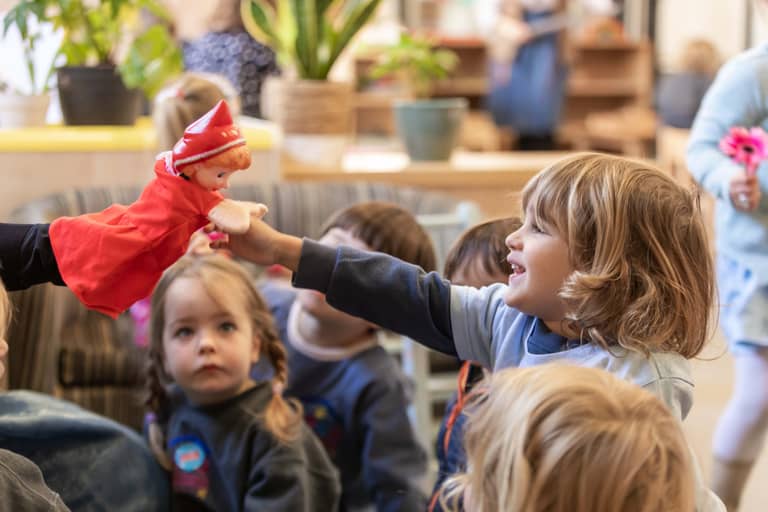
At Casa, language isn’t a class on the timetable — it’s the air children breathe. Spanish, English and French, spoken every day by native-speaking educators, so children absorb language the natural way.
It is through language that people connect. We believe that exposing children to the sounds of different languages — spoken by native speakers, from an early age — is one of the greatest gifts we can give them. It’s also what cognitive science tells us: the more a young child hears the tones and melodies of a language, the more naturally they come to speak it.
“The child has a different relation to his environment from ours… the child absorbs it. The things he sees are not just remembered; they form part of his soul.” — Dr Maria Montessori, The Absorbent Mind
Learning more than one language early is a natural process — innate and absorbed, not taught. At Casa, it simply happens, through relationships and everyday life.
How our immersion works
Real immersion, tailored to each child.
Rather than a one-size-fits-all class, immersion at Casa is built around each child and family.
English, together
English is the shared language of the setting, spoken throughout the day so every child feels at home and included.
A focus language
Families choose a focus language — Spanish or French — whether to start something new or strengthen a language already spoken at home.
A native-speaking key teacher
Each child is paired with a key teacher who is a native speaker of that language, interacting one-to-one in their mother tongue — so immersion is genuine, warm and personal.
Every day at Casa
The languages children live in.
A focus language, taught by native-speaking educators through play, song and everyday care.
The shared language of the setting — spoken all day, so every child feels included and understood.
A focus language, with a native-speaking key teacher for warm, one-to-one immersion.
Why it matters
A gift that lasts a lifetime.
Around 80% of our families are already multilingual, and many choose Casa precisely because real language immersion is so hard to find nearby. Beyond the words themselves, growing up with more than one language builds curiosity, cultural awareness and confidence — helping each child become a capable, compassionate citizen of the world.
Your child doesn’t need to speak the language already. Immersion works whether it’s brand new or familiar from home.
Good questions
Languages at Casa, answered.
Is Casa Montessori a multilingual nursery?
Which languages do children hear?
How does the immersion actually work?
Does my child need to already speak the language?
Why start languages so early?
Hear it for yourself.
The best way to understand our language immersion is to visit and see it in action. We’d love to show you around.